I’m still very new to sharpening in general, I purchased the 3 micron diamond stone set thinking it would be the place to go after 1200/1600 ceramics, I used this grit table as my logic for that decision: http://www.gessweincanada.com/category-s/11328.htm
Unfortunately i’m missing something fairly obvious because the 3 micron stone scratches the crap out of the blade when used after the 1200/1600 ceramics. At what point am I supposed to be using it, and why does something that is ~8000 grit causing so much damage? Thanks!
I haven’t used these stones yet, so I cannot comment from experience.
Are you sure your stones are worn in? How many times have you used them?
A general tip: try to use light pressure, particularly with newer stones. And diamond stones will often give a somewhat coarser scratch pattern, compared to waterstones and ceramic stones, because of the way they work.
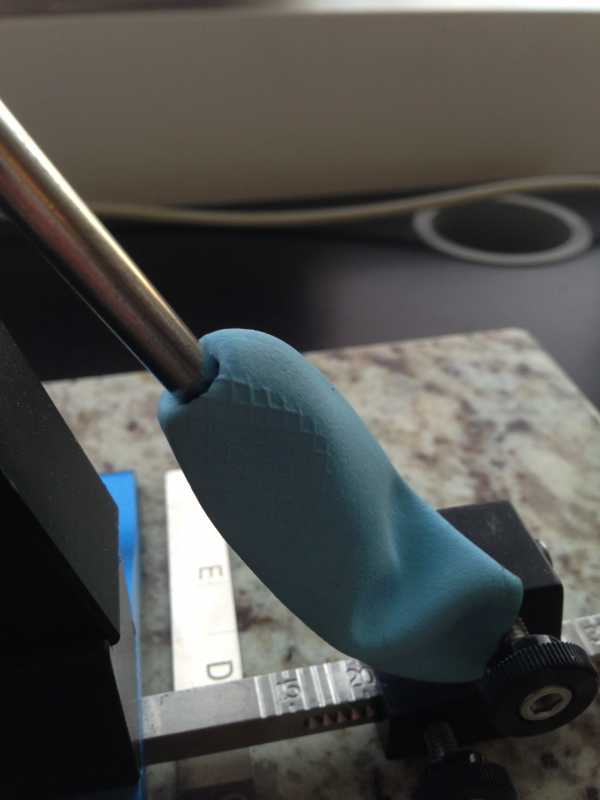
I bought a pair of these to try out. Agreed they’ll need to be broken in. And they appear coarser than the 1200/1600 ceramics. My one and only knife sharpened on the 3 micron is a spyderco delica; it was a touch up, 3 micron only then stropped. The only odd thing I noticed were the scratch marks on the face of the 3 microns, looks like they are from the knife.
About a dozen pics in my photobucket album (sharpening). Here is just one of those pics:
[quote quote=“blacksheep25” post=18329] The only odd thing I noticed were the scratch marks on the face of the 3 microns, looks like they are from the knife.
About a dozen pics in my photobucket album (sharpening). Here is just one of those pics:
[/quote]
This looks pretty weird to me. I’ve never seen that on a diamond stone. Can you see what is scratched? Is it something with the diamonds or is it the backing material?
The stones are very new, i’ve only run them for a few minutes on my zdp-189 manbug. Should I run them for a while on an old junky chef knife just to try and break them in?
Yes, all diamond stones need to break in. I have no experience with the 3 mu stones, but I’d say the other diamond stones take about 5-10 knives to get broken in. Maybe slightly less if all of your knives are made of ZDP-189 .
The July WE Newsletter says this about the 3 Micron diamond stones:
“They are designed to remove scratches left by the coarser diamond stones and further the refinement of your edge.”
When I bought my 3 Micron diamond stones I had the same idea as bleomycin, that they would fill the 3 micron niche. In my nimrod mind, it seemed logical but found the grit chart is not linear, at least with respect to the substrates. To illustrate that, a 3 Micron diamond stone leaves a totally different scratch pattern from 3 micron lapping film, which is different still from a 3 micron diamond paste strop. I’ve started using the following progression: diamond stones, ceramic stones, lapping films, then strops. As I get more experience I may understand this concept better.
My 3 Micron diamond stones have the same scratches as bleomycin’s, having been used on 4-5 knives.
various ways in which different types of stones workInteresting discussion. What I know from other stones is that their grit listing is not always accurate (and often difficult due to the various grit systems and the ). For example, the micro fine ceramic stones are listed as 1.4/0.6 mu, but if we judge them on their scratch patterns, they seem more coarse (see here).
How do they compare to the 1000 grit diamond stones? Do they seem finer?
For now I’d make sure the stones get well worn in. Clay should be back in about a week and I’m interested in his experiences with and opninion on these stones. (One of the things he also wanted to do was to make a new grit comparison list with photos that includes the new stones.)
I use the same progression. I haven’t any water stones, but I think in this progression, they would be an alternative for ceramics. 3 um diamonds are definitely coarser then all WEPS ceramics. They seem even coarser than 1000 diamonds, but my 1000 are well broken in, my 3 um aren’t.
If this is the case, we should ask some questions. But I’ve seen similar questions in the past and their answers were all understandable. Please first make sure your stones are well broken in. Otherwise all comparisons are based on quicksand (Dutch expression, is there a similar expression in English?). Then we should make comparisons, preferably based on published micro-photographs of the scratch patterns. (I understand not everyone has a microscope to do so, but there are people here who can do this.)
If this is the case, we should ask some questions. But I’ve seen similar questions in the past and their answers were all understandable. Please first make sure your stones are well broken in. Otherwise all comparisons are based on quicksand (Dutch expression, is there a similar expression in English?). Then we should make comparisons, preferably based on published micro-photographs of the scratch patterns. (I understand not everyone has a microscope to do so, but there are people here who can do this.)[/quote]
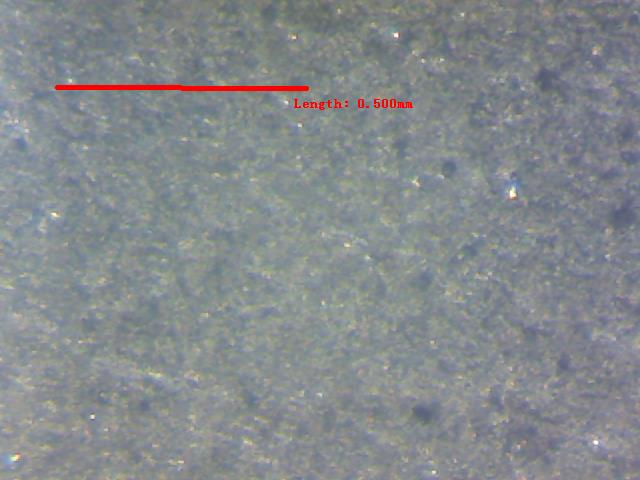
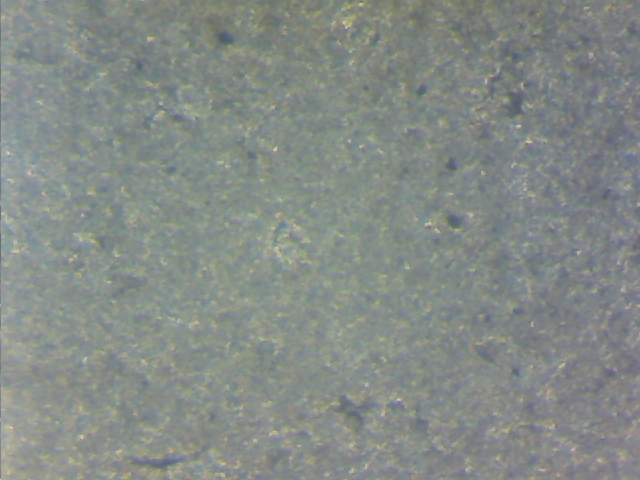
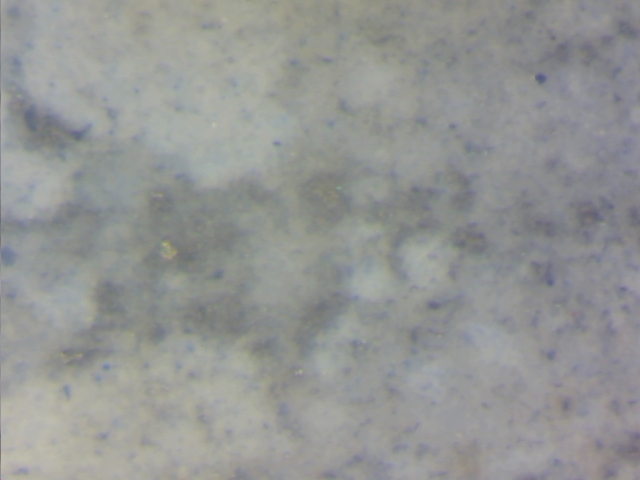
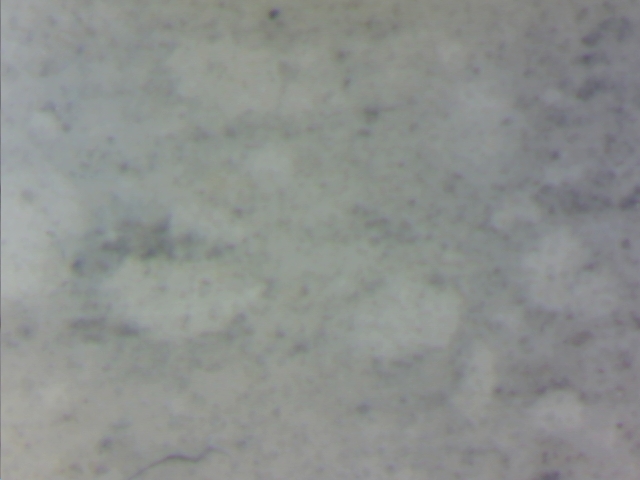
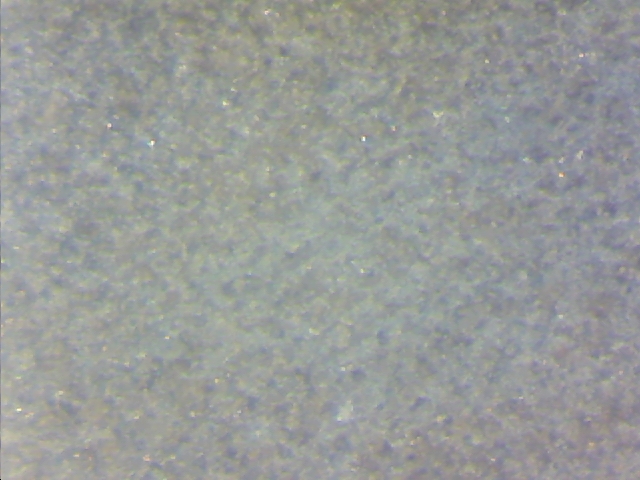
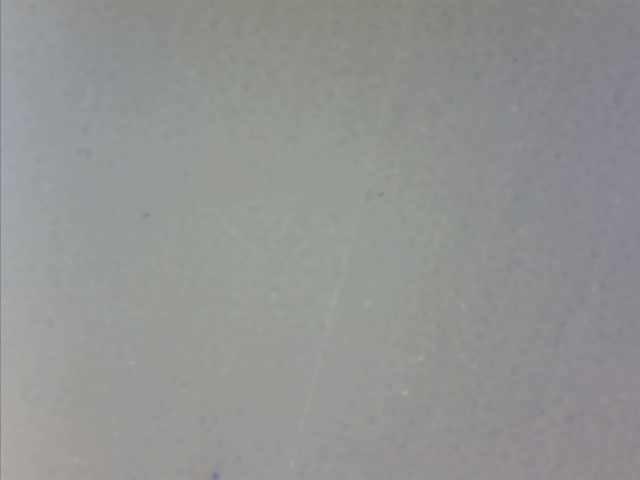
I think that breaking in is a continous process in case of diamond stones. I made some micro-photographs of 1000 diamonds, 3 um diamons, 1200, 1600, 1.4 and 0.6 ceramics (about 220x). DMT and WEPS patterns looks little different and is difficult to say which one is coarser.
Very interesting are the ceramics. 1200 and 1600 look quite similar to each other, but 1.4 look absolutely different. 0.6 look very smooth, but absolutely different than 1.4. So it doesn’t make sense to me to compare grits between ceramics and diamond stones and between different types of ceramic stones.
I looked at the scratches under a 10x loupe, and it must be the base material. I have not noticed that on any of the other DMT products I have. The knife in the pic is a VG-10 spyerco delica, and I was going pretty light since the initial few sharpens on new diamond stones are when you can knock off the diamonds since they’re still “high” and haven’t been worn down yet. Actually, even on my broken-in stones, I still don’t go hard at all (“let the diamond/cutter do the work”).
I compared the 800, 1000 and 3u, and when you run your fingers over the stones, the 3u does seems smoother than the 1000. I’d probably use the natural progression of (note: “-d” for diamond and “-c” for ceramic):
Completely agree with the observations that you cannot compare cutting material size since it’s not apples-to-apples, and diamond will behave different from ceramic. When I have some time, I’m going to take beater knife and sharpen it in progression, then when I move to the next finer grit, I will leave behind a part of the blade at the coarser, in the end, you should see the progression back to back. Maybe someone with a USB microscope could do this as well, but I’m thinking you can still see it with a standard camera.
This is all great stuff. There are several reasons why diamond plates work differently vs. ceramics vs. strops vs. films etc…:
Hardness/friability - Diamonds are much harder and don’t break down into smaller pieces (very easily anyway) compared with ceramics
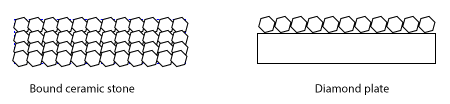
Substrate/matrix - Ceramic abrasives are part of a matrix so the whole particle isn’t sitting above the plane of the substrate. The diamonds on steel plates have their entire thickness above the base level of the substrate and they are also harder so the depth (and therefore width) of the scratch will be bigger from a diamond plate vs. the softer, partially embedded, and therefore not full thickness, aluminum oxide particle of the same size in a ceramic stone. The diamonds on a film will compress into the film so the entire diamond isn’t exposed and isn’t pushed into the metal with as much force. The same is even more true with strops.
So when you have a bunch of 3um aluminum oxide particles fused or bound into a matrix, the size and hardness of the particles contacting the blade will be very different from the size and hardness of a 3um diamonds bound to the surface of a steel plate. The diamonds will stick up more, cut more deeply and give a wider scratch.
Another thing about ceramics is that the particles can be dramatically altered during sintering. They often fuse together creating larger particles or strange shapes that, when exposed in the matrix, can manifest as smaller particles.
Looks like I need to get some. A good step after 1000 diamonds before going to ceramics. Or for when I stop at 1000 diamonds, I might add these, then stop. Also interested if anyone uses them for touch ups as a starting point. I have touched up a few blades with ceramics, but usually damage the edge enough I have to go back to 400/600 diamonds or so.
I’ve been absent from the hobby for about a year so hopefully I didn’t just miss the answer I’m looking for, but what are you guys using on the glass side of these stones? Everything I’ve read makes sense here as far as using the 3 micron stones between the 1000 grit diamonds and the ceramics - I have the 1200/1600 ceramics - but I’ve never used a lapping film before so I can only guess at how it compares or fits into the mix.
Given what I’ve read on it, it seems like maybe a good progression would be:
1000 D -> 3 micron D -> 1200/1600 C -> 3 micron lapping film? -> 5 micron leather strops
Or maybe I should go ahead and add the microfine ceramics into the mix and go with a lower grit stropping film:
1000 D -> 3 micron D -> [i]1.4 micron C[/i ]-> 1200/1600 C -> .6 micron C -> 1 or .5 micron lapping film? -> 5 micron leather strops


 .
.