In previous threads there have been in-depth discussions which conclude that—for a straight-edged blade—the straight edge can be oriented at any angle in the clamp jaws and the sharpening stones would still grind a constant bevel angle. In other words, this straight blade edge does not have to be parallel to the clamp jaws; it can be angled relative to the top of the jaws and still sharpen at a constant bevel angle/width.
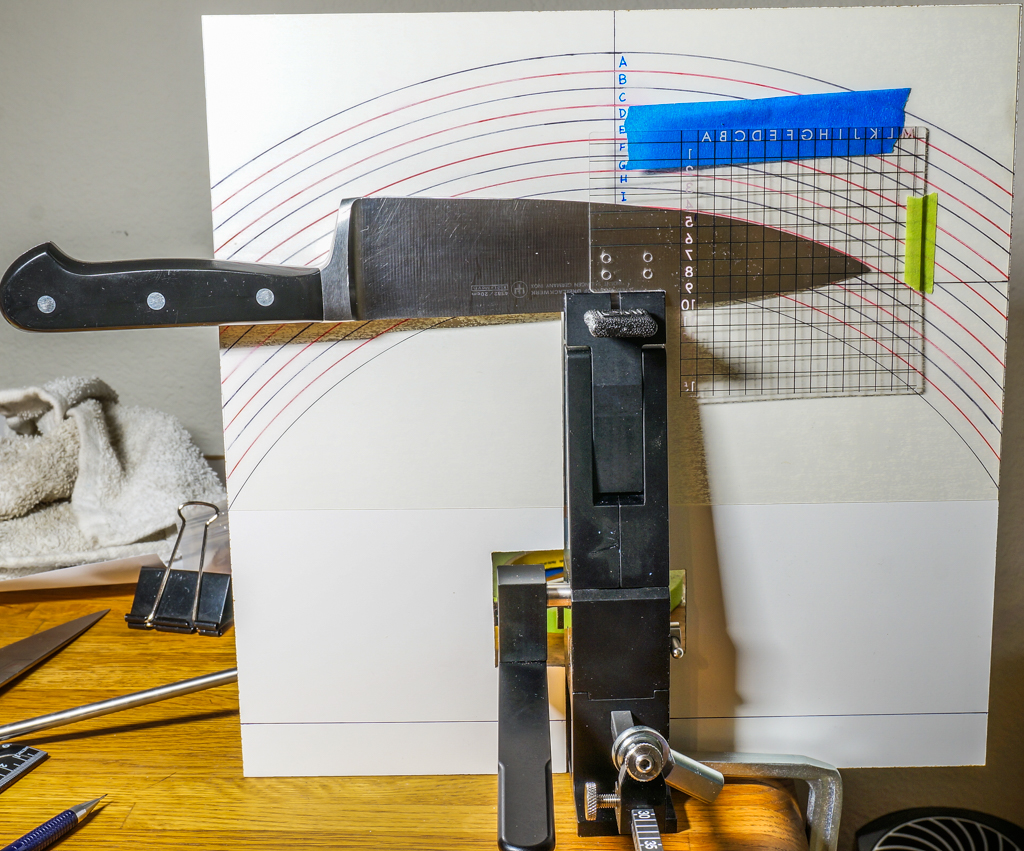
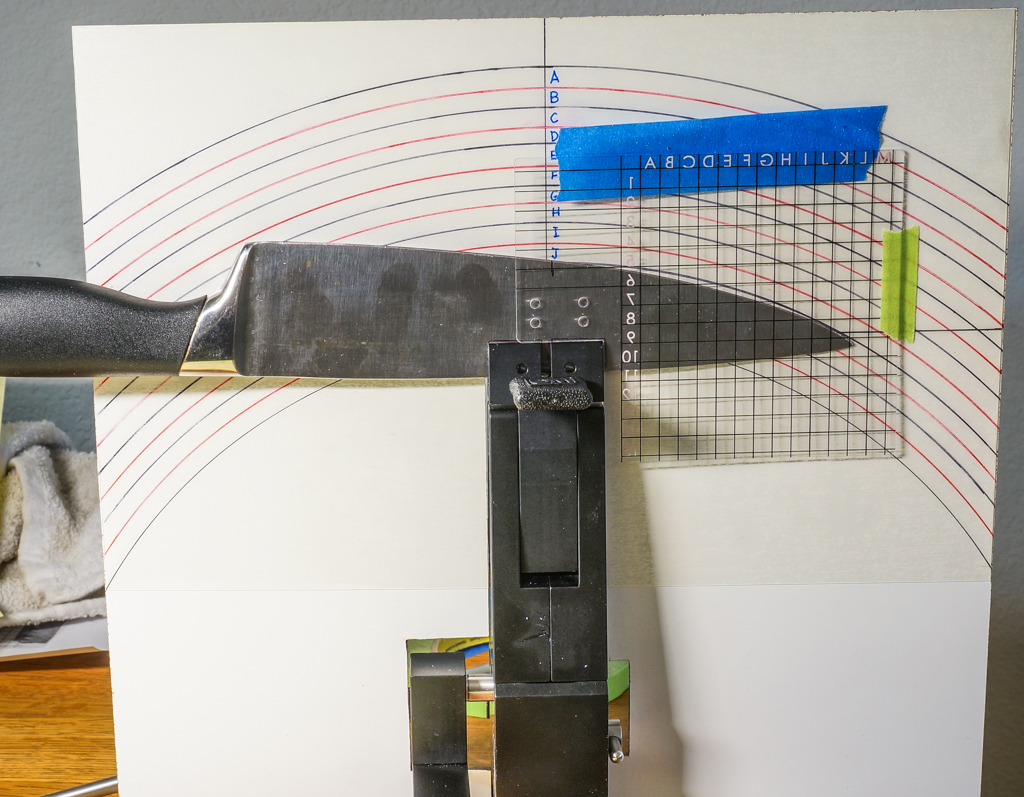
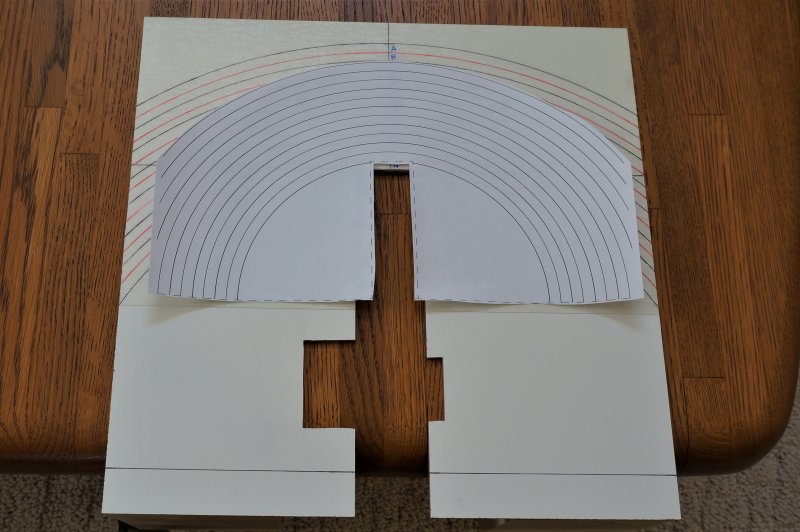
Separate but related, previous threads have also discussed that due to the WE sharpening rod/stone being mounted to a fixed pivot point at one end, when sharpening curved blades you want the curved edge of the blade (when mounted in the clamp jaws) to be aligned to a constant-radius circle traced out by the stone/rod. This circle is drawn on the plane that bisects the blade edge’s centerline (see photo of a Circle Contour Jig I made, below).
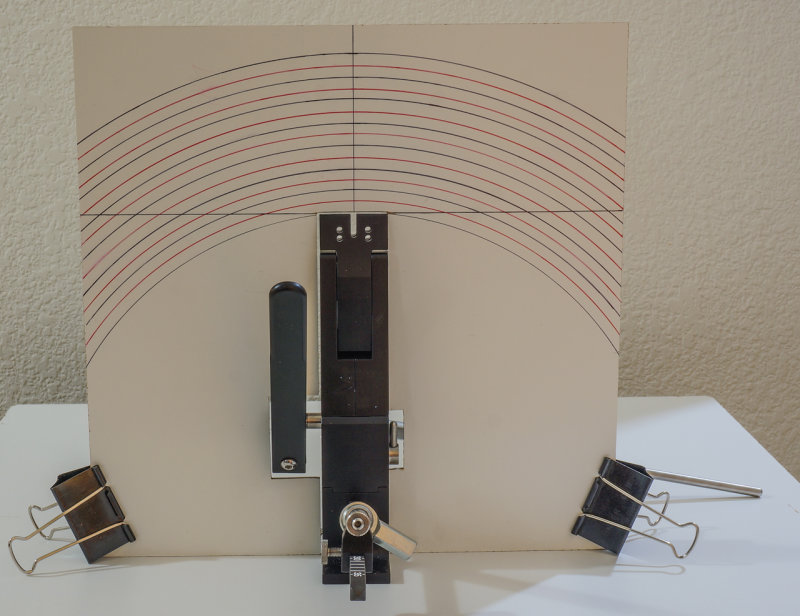
Back to the first point about straight blades, it’s not like a blade that is ever-so-slightly curved will result in huge differences in the bevel width/angle. It gets worse incrementally, and as the blade becomes more severely curved, the bevel mismatch becomes larger.
So, how much curve is too much?
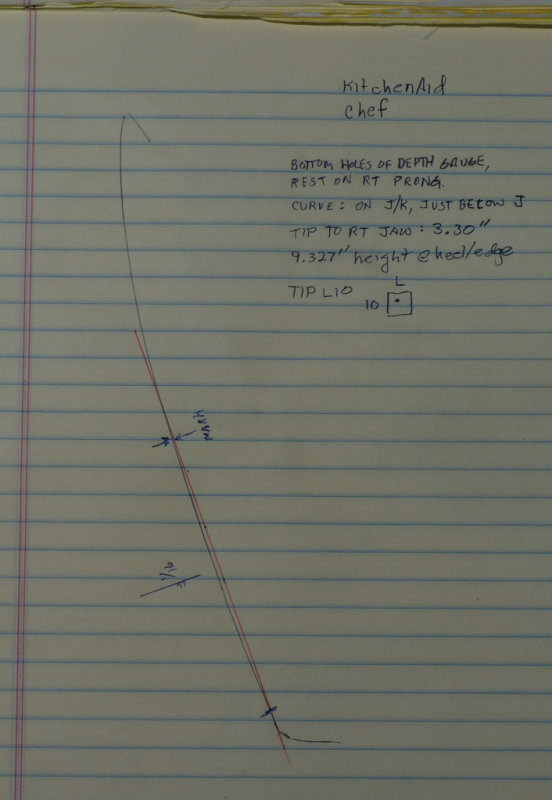
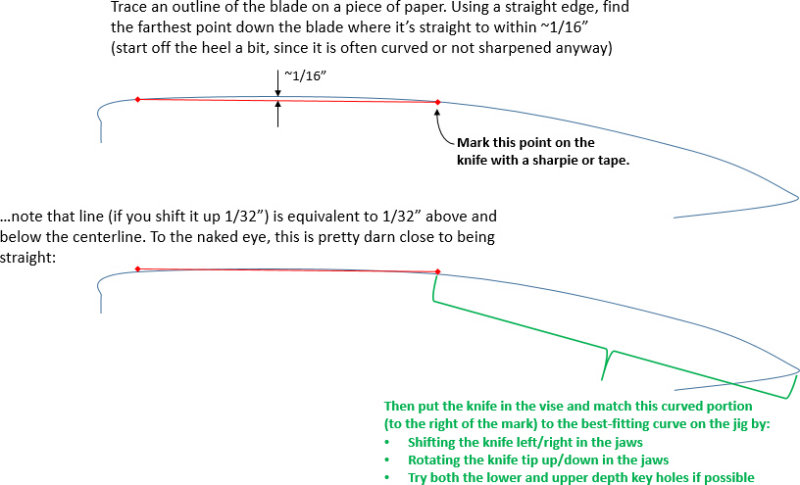
One way to measure how much a curve in a blade deviates from being perfectly straight is to trace an outline of the blade’s edge on paper, then use a straight edge with one end planted just off the heel in the traced outline, and pivot the straight edge to different points farther down the blade toward the tip, and measure how far the straight edge is from the high point in the traced curve.
I don’t know the answer to “how much curve is too much” but let’s say, for the sake of argument, that a 1/16" curvature is “close enough to straight” that all the assumptions related to straight-edge blades and the tilt angle in the vise still holds. In other words, there may (after sharpening) be some small difference in the bevel width that you could measure with a 200x microscope, but to the naked eye the bevel looks uniform across this mild curve.
See the drawing below:
But what about 1/8" of curvature instead of 1/16"? Will that result in a bevel that looks the same everywhere along the edge to the naked eye, or is that too much?
The reason it’s important to nail down “how much curvature is too much” is because the larger the length of the “approximately straight” portion of the blade edge, the more of the knife blade you can ignore how it is positioned/angled in the clamp, and you can just focus on aligning the remaining curved portion to the best-fit circle contour.
Or in other words, the smaller the length of the knife that has to be considered curved, the easier it will be to find a matching circle contour for the curved part of the knife.
Before I go too much farther down this road, do you guys agree or disagree with what I’ve described above, which I’ve summarized below:
- A very slight curve is approximately the same as a straight edge, as far as being able to clamp it without regard for the angle of the edge.
- The open question is, how much curve is too much to approximate it as straight. But 1/16" deviation seems like a reasonable assumption to start with.
- With the above approximation for straightness, many knives can be divided into two segments for aligning it in the WE clamp: a straight part from the heel to point "x" along the edge, and a curved part from point x to the tip. The approximately straight part can be clamped at any angle, allowing you to focus just on matching the curved part to the circle contour jig’s semi-circles regardless of the angle of the straight part of the knife.