Clay now has that fine folder in his hands. I am sure he will comment and perhaps put up some pictures as he plays with it. I have yet to see it myself so I too will have my eyes peeled for any bit of info on this rare knife.
Leo
Clay now has that fine folder in his hands. I am sure he will comment and perhaps put up some pictures as he plays with it. I have yet to see it myself so I too will have my eyes peeled for any bit of info on this rare knife.
Leo
Clay’s probably chomping at the bit… new knife in… must fix website… new knife in… must fix website. :evil:
Yep, something like that…
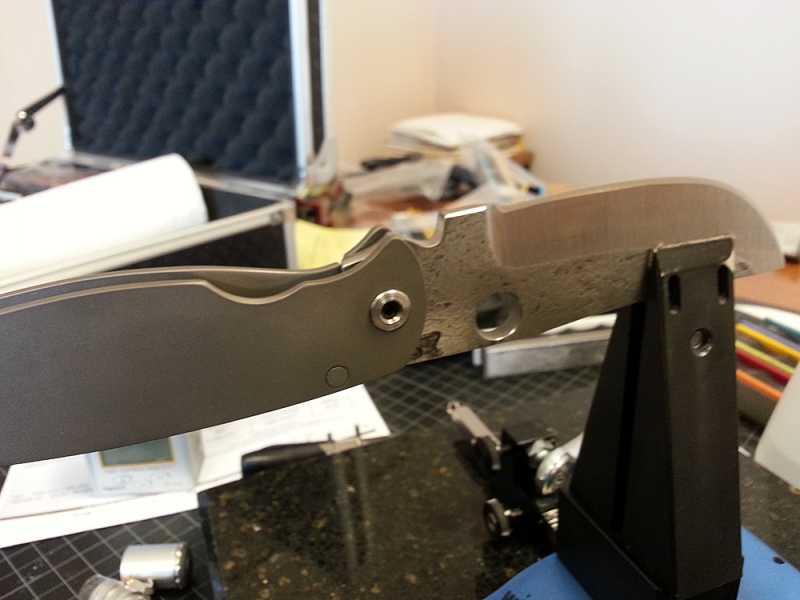
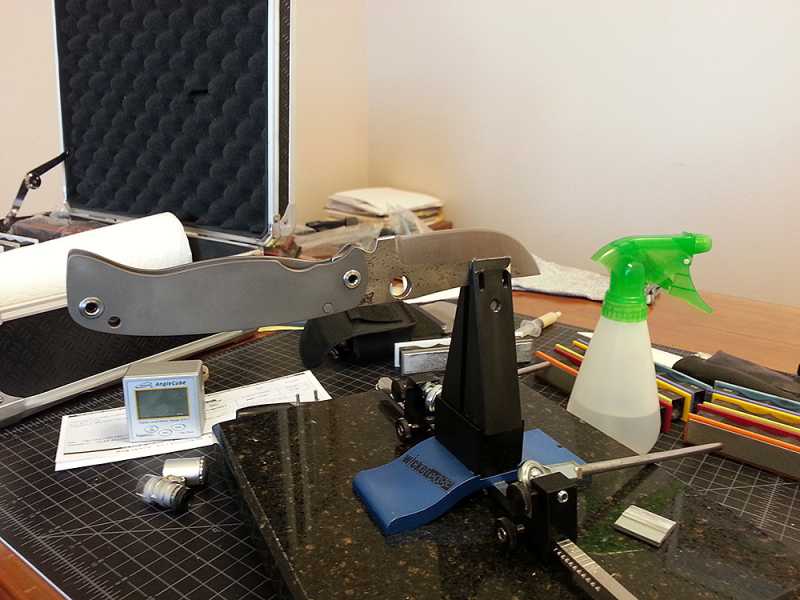
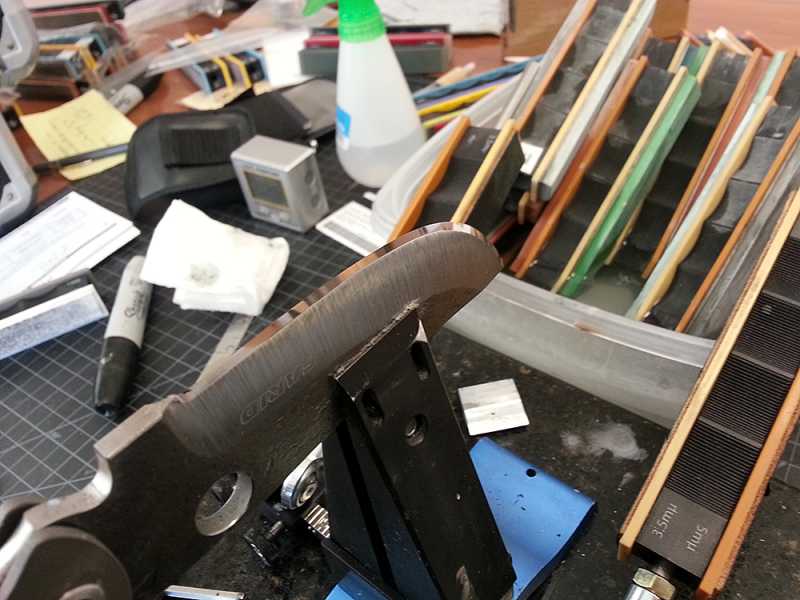
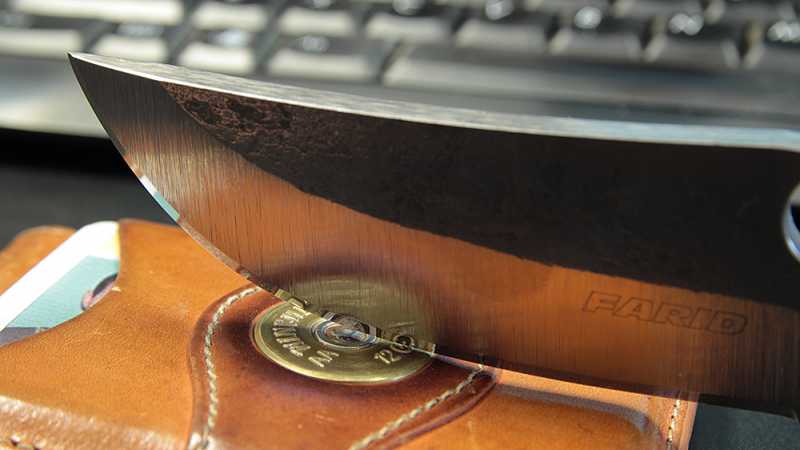
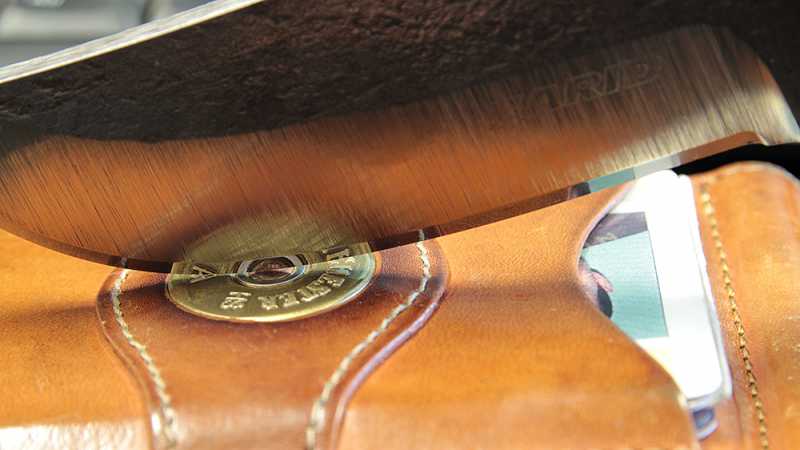
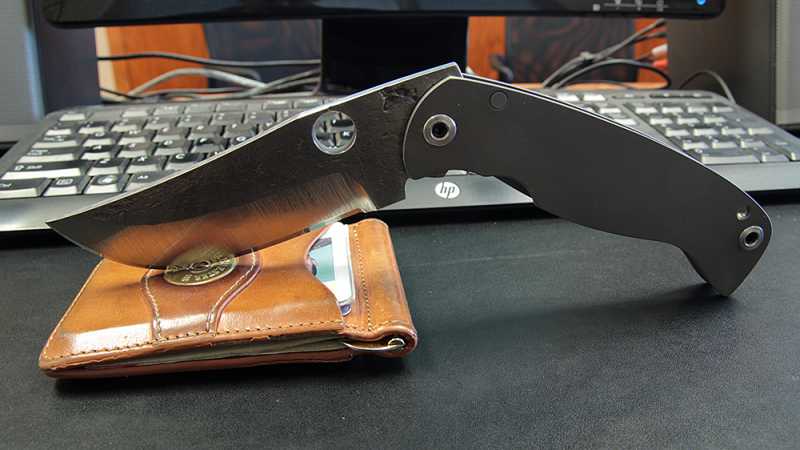
Here are a couple quick camera phone pics of the Farid knife:
And a couple more:
I’ll get more/better photos done when I’m not so immersed in the website migration.
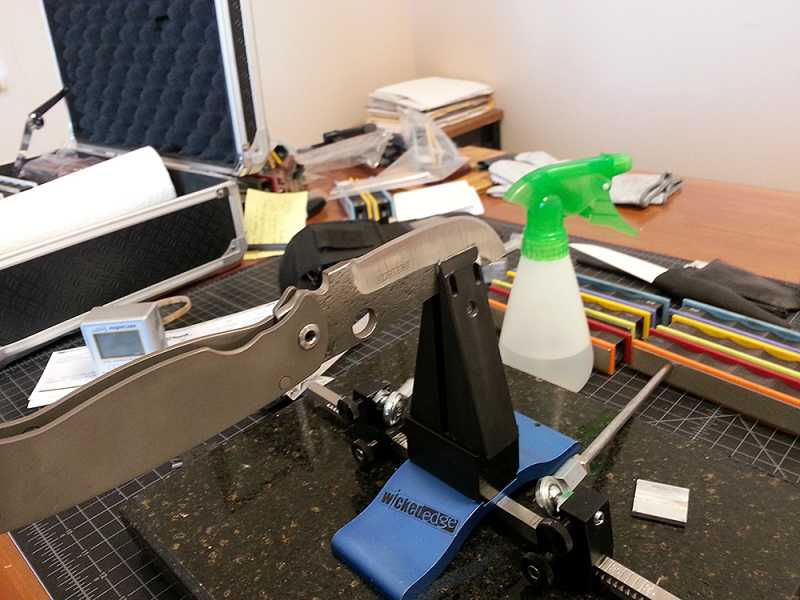
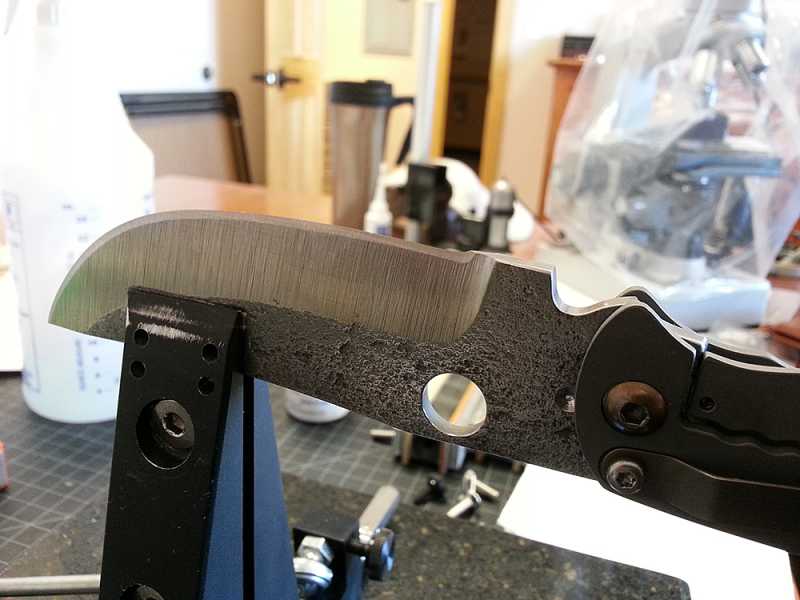
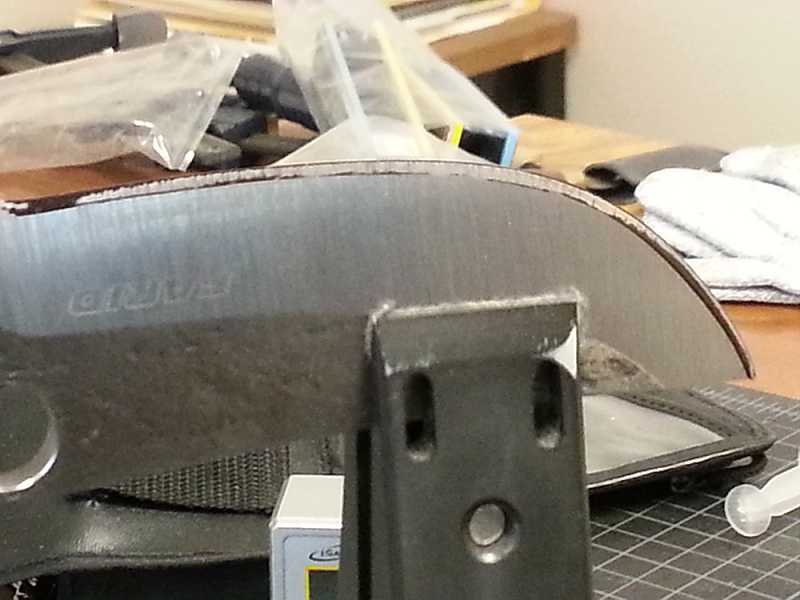
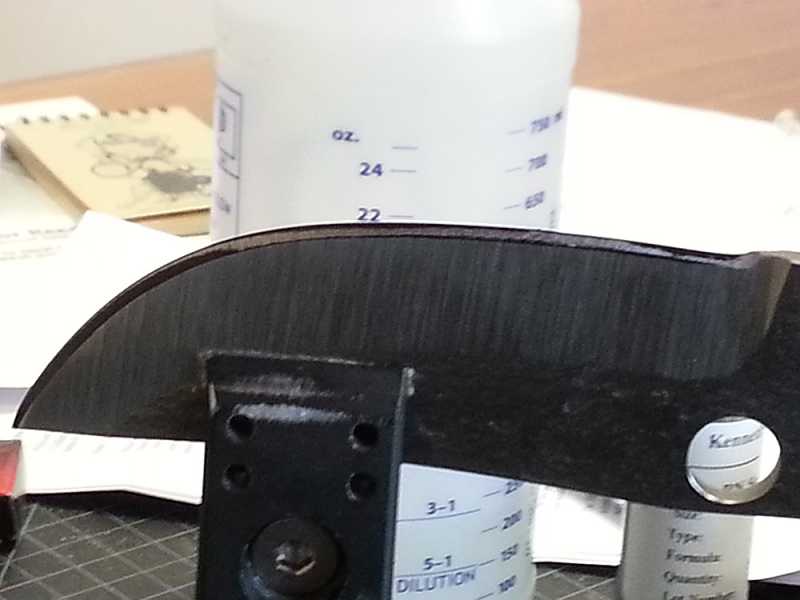
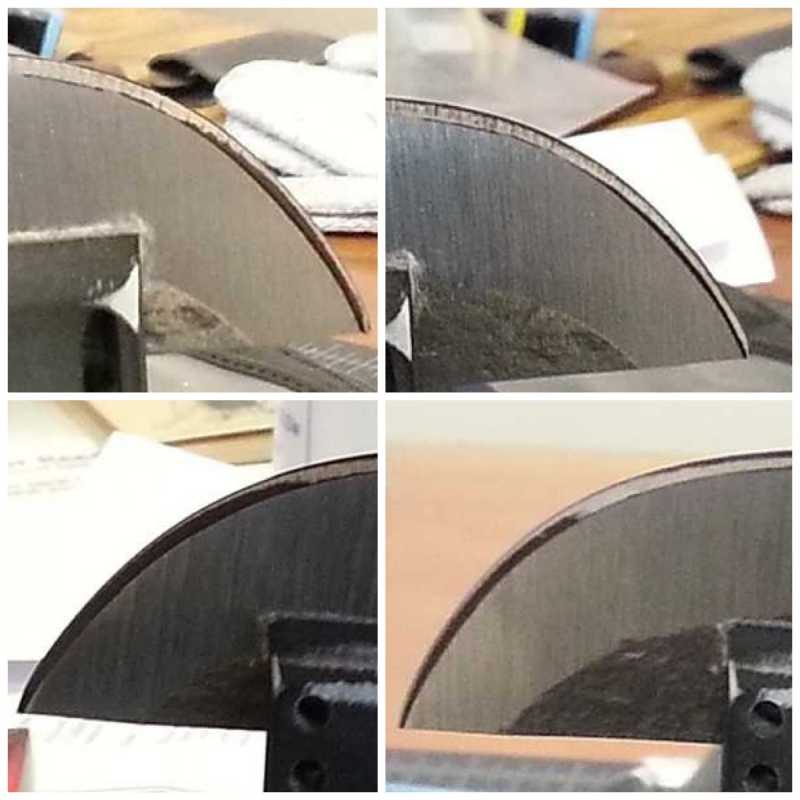
Delving in a little, figuring out the angles and sweet spot etc… For the first try, I mounted the knife at the bottom location and at A.5 due to the steep drop off of the tip which is straight inline with the spine. I verified that the angle already ground on the knife was in the neighborhood of 20 degrees per side. Here are some pics:
Clearly the stone wasn’t tracking equidistant from the edge along the length of the blade, so I knew I’d have to move it forward, and there are some pretty obvious discrepancies between the two sides.
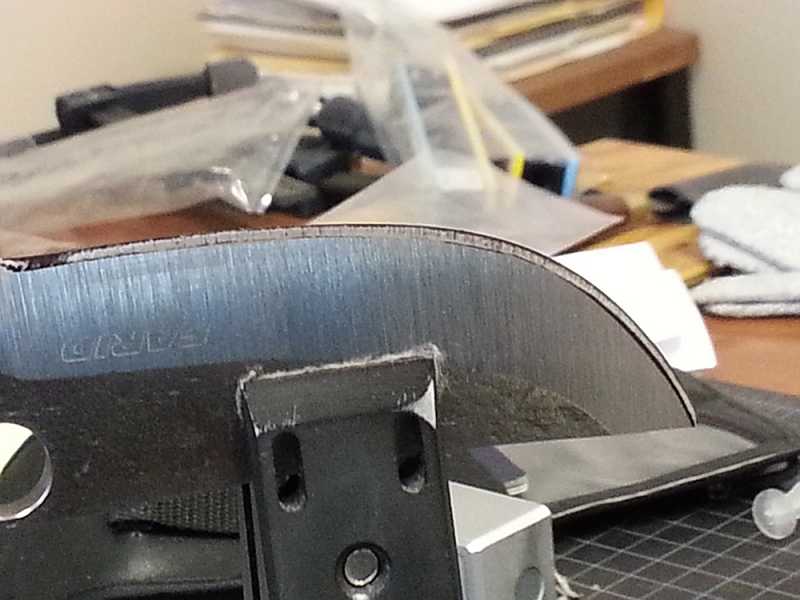
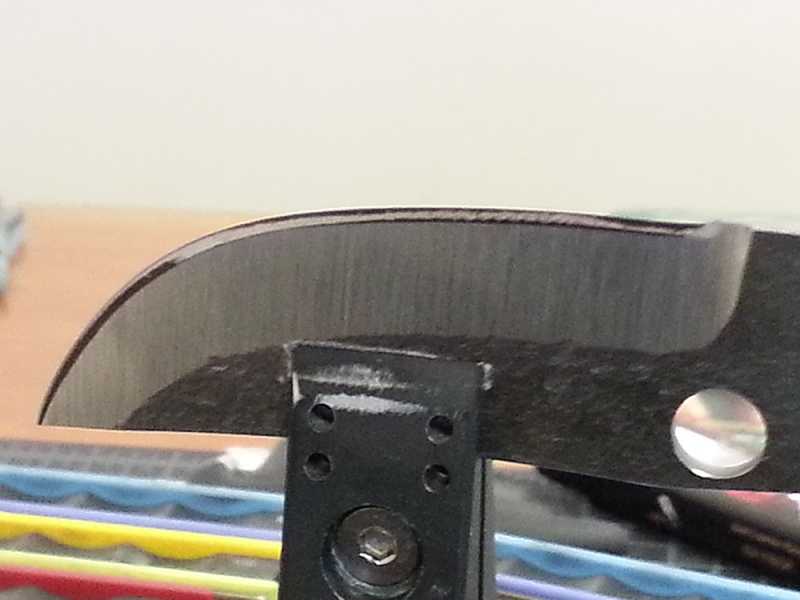
Next, I moved the knife forward until the tip was at B:
This position worked much better. I went on and tried B.5 and C for the heck of it but ended up coming back to B for the best fit.
Thanks Clay,
While the article about “finding the sweet spot” is well written and I followed it completely, this helped much more in my understand to see different settings and how the marker is removed.
I have not tried this many settings on one knife before, but now I will. With uneven factory bevels plus taking the angle more acute I wasn’t sure how I could tell anything by the marker, but these photos make it clear how different setting affect the bevel look.
Don’t forget, this knife’s for sale (unless Clay already called dibs). 
[quote quote=“leomitch” post=9055]Recently I obtained a custom-made Farid Mehr Rex 121 steel folder with a titanium body. He made only 20 of them, so there are no others available anywhere in the world. I am going to sell my Farid folder for a bargain price…I paid $650 US for it, but I will sell it to a member of this forum for $525 US plus shipping. This is truly a collector’s item.
Leo[/quote]
http://wickededgeusa.com/index.php?option=com_kunena&func=view&catid=17&id=9055&Itemid=63#9055
CPM-REX-121 steel at 68-70 RC
CPM REX-121 CHEMICAL COMPOSITION
Carbon 3.40 %
Chromium 4.00 %
Vanadium 9.50 %
Tungsten 10.00 %
Cobalt 9.00 %
Molybdenum 5.00 %
And it’ll come with a wicked edge! (sharpened not a sharpener…)
[quote quote=“Geocyclist” post=9348]Thanks Clay,
While the article about “finding the sweet spot” is well written and I followed it completely, this helped much more in my understand to see different settings and how the marker is removed.
I have not tried this many settings on one knife before, but now I will. With uneven factory bevels plus taking the angle more acute I wasn’t sure how I could tell anything by the marker, but these photos make it clear how different setting affect the bevel look.[/quote]
Playin with a little program i had… here’s a side by side comparison of the tips.
Left A.5 setting Right B setting
Great stuff Clay! Every time you work on a knife for us to see, I learn something else to add to my knowledge of sharpening. When I first started with the WEPS, the whole thing was more or less mechanical in nature, but watching you and others here too, the act of sharpening can also be an intellectual experience. Since that happens to be the way my mind works, I am improving my edges more and more as I watch and read your work and that of others here. It is an education.
Tell me how the Farid knife opens and closes…is it smooth and is the lock-up strong. Obviously the knife is built like a tank with that super steel and titanium body, but is it more than just a super strong knife in your opinion?
Leo
You’re right Leo that it’s built like a tank but the action is smooth and the lock is very strong. It’s a no-frills work horse in terms of design but it has great visual appeal from the hammered Rex 121 and the matte gray titanium.
I just completed the initial bevel formation which took about 5 minutes per side to erase all the marker and grind marks. This is the second Rex 121 knife I’ve handled and each time I’ve been very surprised at how easily the diamond plates cut through the steel.
That is surprising for such a steel, but it bodes well for developing a sharp edge and keeping it maintained. Many of the people who were buying were speculating that it would be difficult and time consuming to sharpen this kind of blade of REX121 Crucible steel.
What angle or edge geometry do you think would be best for this blade Clay?
Leo
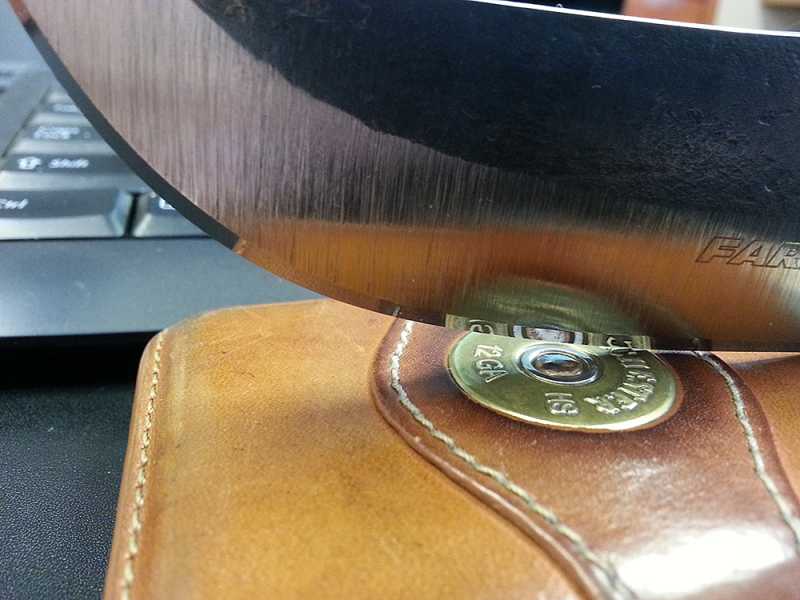
Here are a few pictures of the blade as it’s come along:
After the 1600# Ceramics
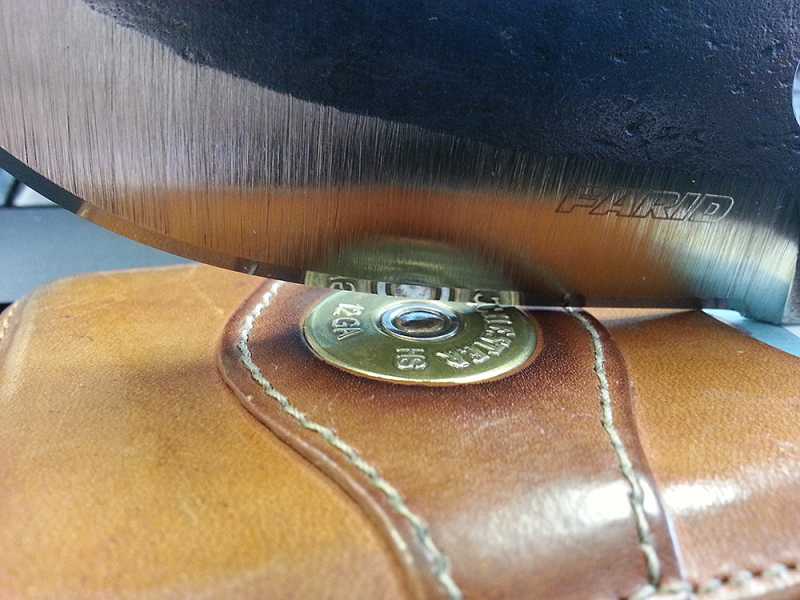
Stropped down to 0.5um on cow leather
I’ll get some better photos snapped with my big camera later, for now I snapped some quickly with my phone.
[quote quote=“leomitch” post=9362]That is surprising for such a steel, but it bodes well for developing a sharp edge and keeping it maintained. Many of the people who were buying were speculating that it would be difficult and time consuming to sharpen this kind of blade of REX121 Crucible steel.
What angle or edge geometry do you think would be best for this blade Clay?
Leo[/quote]
I’d heard from someone else that REX121 and diamonds work well together - seems to be the case. I’m not sure about the optimal angle, it’s something that you’ll have to test a little. I suspect that the 0.5um finish is probably too fine and that you’ll probably want a slightly coarser micro-bevel, but won’t really know until you start using it. I left at 20 degrees per side for now which seems reasonable. If you find that it holds up well, it might be fun to take it a little lower though I think this knife is designed for hard work, so maybe just leave it a little more obtuse…
Clay, Do you think the hardness. 68 / 70 RC. Is a factor in why the diamonds work so well?
The new edge look incredible!
[quote quote=“JamesBell” post=9366]Clay, Do you think the hardness. 68 / 70 RC. Is a factor in why the diamonds work so well?
The new edge look incredible![/quote]
That’s a tough question - I’ve worked with a lot of other super hard steels like the friction forged D2 from Diamond Blade Knives which also get into the 60s for hardness, some of the Hitachi steels, ZDP-189… they all feel and respond differently with the diamond plates, probably to do with wear resistance. I guess that the REX121 is hard and fairly tough but not extremely abrasion resistant.
A couple more photos:
People who are interested in this knife might like to jump over to the Blade Forum and search ‘The Farid K2 Rex 121 Folder’ to see a review by an owner. To show the reliability of this edge for holding its sharpness, he hacked through 5/8 inch manila rope 412 times until his hand and wrist were numb and the blade still neatly sliced through a thin page of telephone book paper. The review is interesting. He made a 15 degree per side convex edge and is very happy with that. A good read.
Leo