Hi Ralph,
Clay asked Tom and I to respond. I think Tom did an excellent job responding, but I would like to add a few more comments too. And very much appreciate the opportunity to discuss this topic.
These Shapton stones are cut by hand as opposed to automated processes and I try my best to maintain precision in the cutting process, but inevitably error accumulation does creep in as any cabinetmaker or woodworker knows. You will usually find me walking around with a micrometer sticking out of my pocket.
First let me address the width issue of the stones. The whole Shapton stones are usually 17 mm thick, slightly less than the 3/4" width of the blanks. On occasion, from cutting another shape from a stone, I can go to doing a cut in the opposite plane and getting a wider piece available, fully filling the 3/4" blank. Rather than risk taking off the difference of 2mm (3/4 inch is 19 mm), I prefer to give the customer more stone than he paid for rather than less. So sometimes the stones will be wider. To me I prefer to err on the side of giving more stone.
Regarding stone thickness, there will be variations in the thickness. Sometimes a good bit. This does vary from day to day for a number of reasons beyond the scope of this discussion. If the variances are a lot (relatively speaking), I have to compensate for this by cutting the stones thicker, which significantly (negatively) affects my yield rates. And spending considerably more time getting the stone to within specification. Cutting a stone too thin yields a total loss, so I tend to ‘give’ extra.
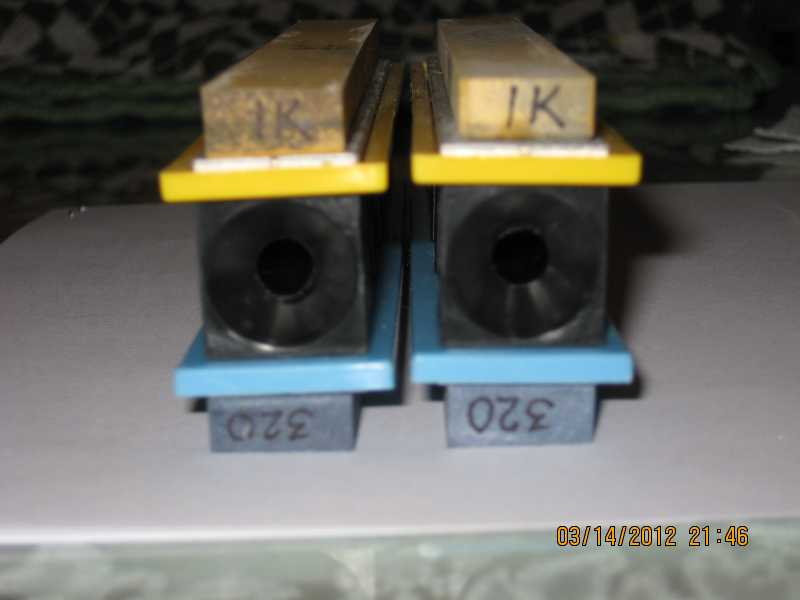
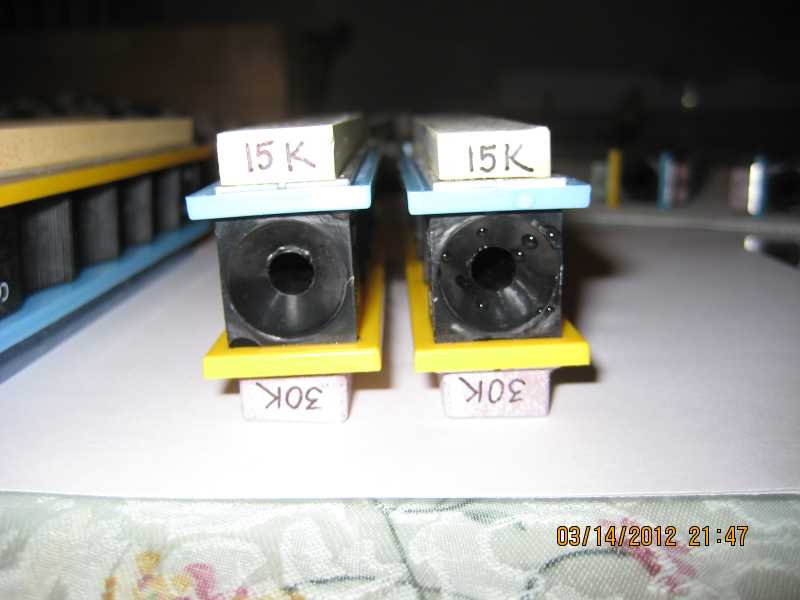
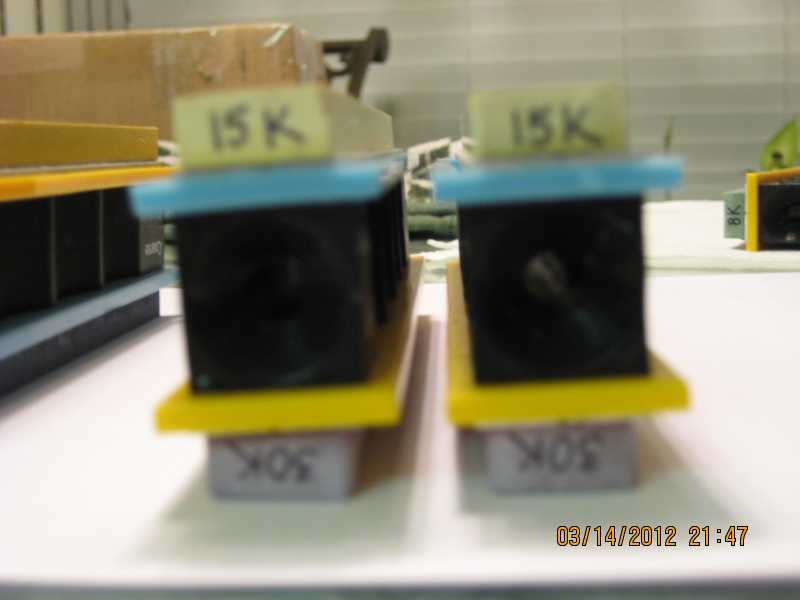
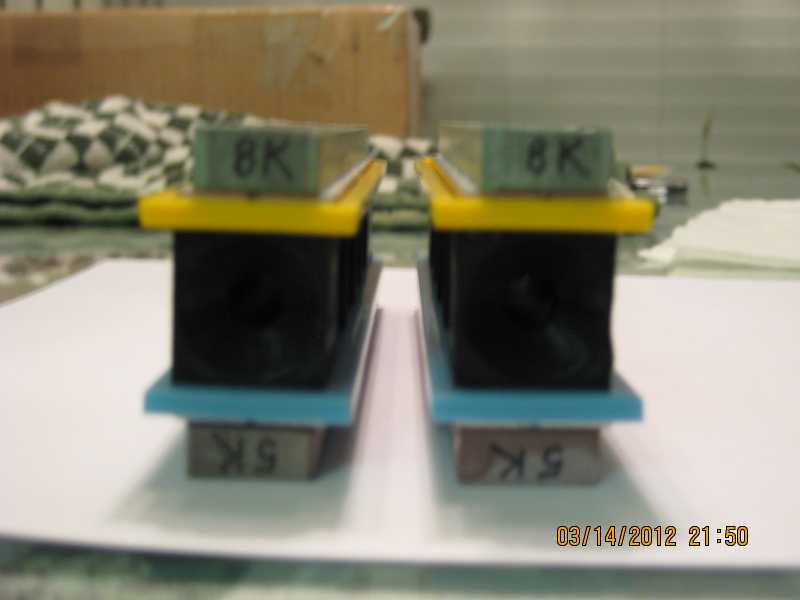
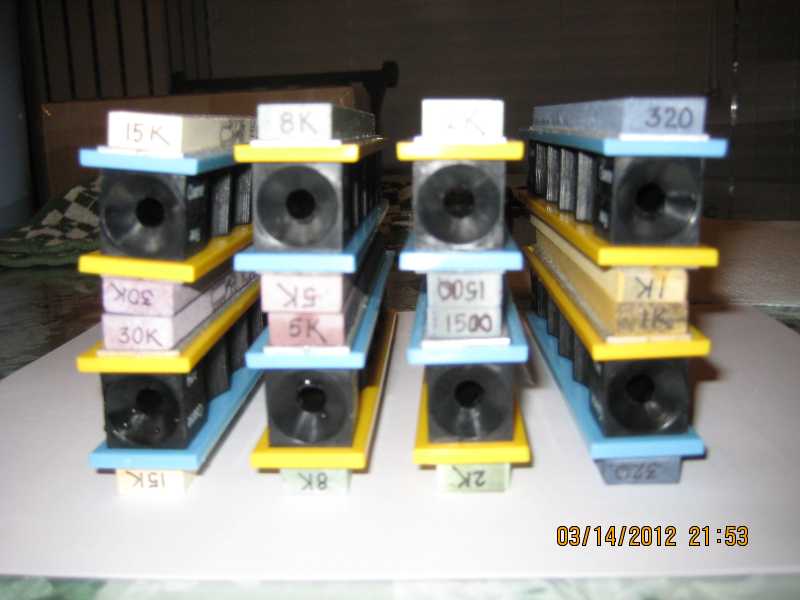
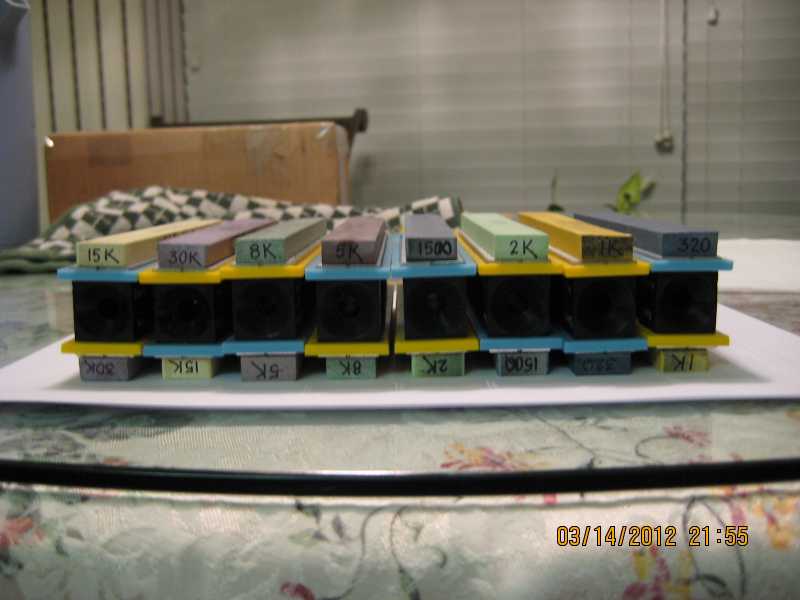
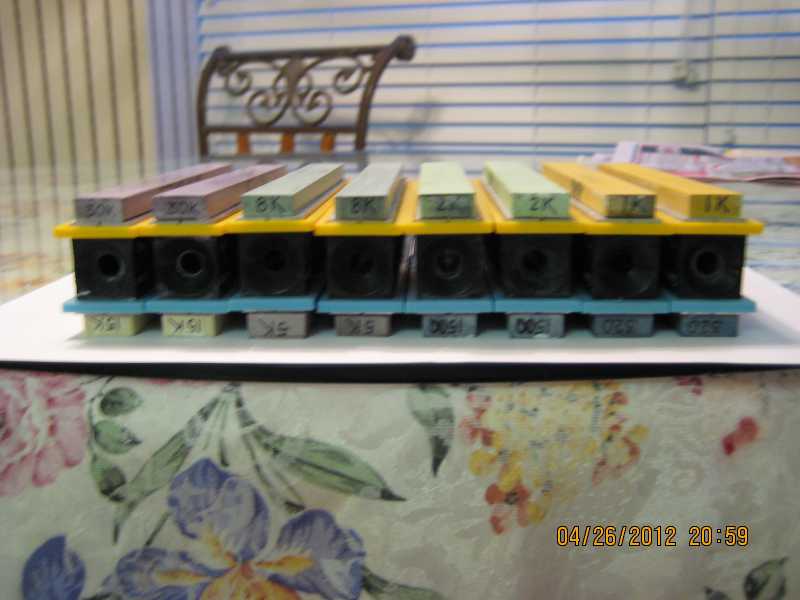
As Tom mentioned earlier, the spec is for a 5-6 mm thick stone. As you can see in the pictures, the stones in the pictures significantly exceed that thickness. Even more significant height errors can occur from the blade angle being off by one degree. I am constantly calibrating these angles but ultimately need to fine adjust for this degree of skew by hand, lapping the stones individually.
This skew issue is one commonly seen by freehand sharpeners and EP users as well. Fortunately, in each of these instances, especially in the design of the Wicked Edge sharpener, the stone pivots freely and compensates for this small height variation. If not, even with flattening, enough stone should remain to meet the specification. Personally I would prefer a slight degree of skew and getting a lot more stone. The stone surface should be FLAT, but a slight degree of skew should not matter.
Regarding actual stone thickness, as Tom mentioned, as stones wear, the thickness variation should be taken into account and an angle cube is the tool for the job. You could lap all your stones to the same height constantly (NOT recommended), but since your 30k stone will wear VERY slowly compared to say a 320 grit stone, you really don’t want to just flatten and wash your 30k stone down the drain.
Flattening stones and adjusting skew is an inherent part of the sharpening process. As your stone wears down you will be making adjustments to keep your stones flat and control skew over the life of each stone.
I hope this is a reasonable explanation showing a bit of what goes into handcrafting these Shaptons for the WEPS machine and maintaining them over their lifespan.
Ken