Tony, I think you need to not take the chance with any knife, that any sort of damage, however slight, would really harm the knives appearance. I generally use a small rectangular patch of real leather chamois, dry, between my knives and the vise jaws. (All my vises are Gen 3 vises). It serves two purposes. It allows for a more secure clamping of the blade and it protects the knife steel from damage from both the jaws and any sharpening debris. This method has worked well for me. I’m still cutting up the first chamois I purchased almost four years ago to give this method a try. I have used it pretty much for every knife since.
I do cover the hinge and locking mechanism of folding knifes with blue painters tape to keep metal sharpening dust and/or whetstone swarth out of this area.
I have initially just sharpened some knives without anything between blade and clamp (as clamp seemed to be rubbery enough at the time). After a while, I started noticing slight “grindy” feeling when clamping the blade and I wasn’t too sure whether it was clamp grinding on the blade itself.
From then on, I had been using a cut out paper towel (folded several times to provide extra buffer) to wrap around the blade. Seemed to be secure enough and have done several sharpening this way. I’ll try swapping over from paper towel to leather chamois for future sharpening as it seems like more secure and permanent solution than cutting out paper towel every time I do sharpening. Thanks for the tip.
I’d limit the layers. When I was first getting started with W.E. I tried a lot of cominations. Thicker, layered and more compressible materials, including multiple layers of blue painters tape did shift or slide on the layers, (despite the adhesive). One layer seemed more stable and effective then any other method.
It is an advantage using the tension adjustable Gen 3 vise, also. It does simplify and improve the clamping process.
All good ideas. I use a single layer of the foil tape used for sealing duct work. It clamps beautifully, will never move on you and doesn’t tend to leave adhesive on the blade. It can be a PIA to remove, so I try to leave one corner of the tape folded over to give me something to pull on.
Tcmeyer, I have a roll or aluminum tape that probably came from my uncles house when he passed and he probably brought it home from Boeing (work) prior to that in the 70s.. is this the type of tape you are talking about, it measures about .22 mm/ .0095" thick?
Most likely it is speed tape. We use it where I work - Wikipedia blurb below.
Speed tape is an aluminiumpressure-sensitive tape used to do minor repairs on aircraft and racing cars. It is used as a temporary repair material until a more permanent repair can be carried out. It has an appearance similar to duct tape, for which it is sometimes mistaken, but its adhesive is capable of sticking on an airplane fuselage or wing at high speeds, hence the name.
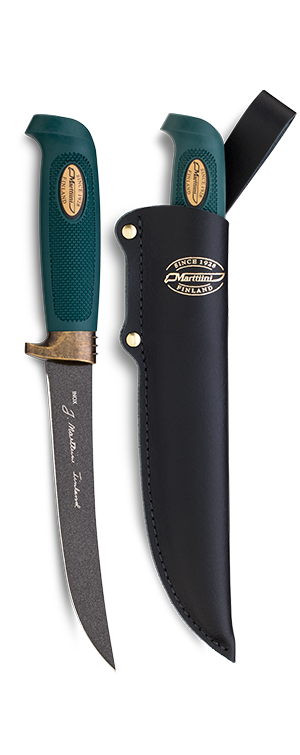
This is one area of the WE (Gen 3 Pro) sharpening that I’m trying to learn at the moment. How to tighten the blades to the vise so that they don’t move during the sharpening and not overly tighten to leave marks. It is especially challenging for me with the Marttiini hunter’s carving knife and other knifes with the similar coating. “Martef coating reduces friction to almost zero”. This is a nice feature until sharpening is concerned I have experienced with blue masking tape, real leather chamois etc. They might stay in place easier when re-profiling is not needed and I might try to use my low angle adapter to get better grip from the carving knife.
My other hunting knife (Big Game Martef) is also Martef coated but the blade feels a bit too thick to use with my leather chamois. It should only be 0.11" thick blade so without the chamois it is Ok but it is challenging to attach to the vise so that it does not move and the coating stays undamaged. I have used this knife heavily for the past 10+ years so the blade is not new but I would still prefer not to damage it during the sharpening. This is a learning process for sure.
Picture: Marttiini hunter’s carving knife from marttiini.fi
I regularly use real leather chamois between the knife blade and the vise jaws. I cut a small rectangular patch that I wrap up around the knife sides to protect the blade when clamped in the jaws. Sometimes once the knife is positioned and clamped securely, I will need to trim off excess chamois cloth that hangs out the top of the jaws and hangs over the sides with a small scissors.
Jay before you assume you’ll need to use the low angle adapter, LAA, try to clamp this knife in the jaws as high up as you can while still allowing you to clamp the knife fully, tightly and securely. The knife may need to be raised higher above the depth key pins, where it no longer sits on the pins, to accomplish this. As long as the knife is securely clamped is all that is important. You can still employ the alignment guide, AG, or the advanced alignment guide, AAG, using the depth pin to record this clamping position in your sharpening log.
Only after you determine that this high position clamped knife can not be sharpened due to stone - vise contact if the set bevel angle is low, would I opt for the LAA or the Tormek small knife adapter. I attempt to use the Gen 3 Pro jaws first, always. I found I can make it work more often then expected.
+1 on the leather chamois, I double stick tape it (2 pieces) to the inside of the jaws for convenience. It holds up great, blade doesn’t move and no damage.
MarcH. That is exactly how I sharpened my carving knife. The problem was not that the stones would hit the vise. It was that the Martef coated knife would slightly move despite of the real leather chamois. I have not had this problem with knifes without this type of slippery coating.
Lay: try using the aluminum foil tape that is made for sealing heating and air conditioning vent ducting. It seems to stick to everything, allows the vise to “bite” into it for solid positioning and still comes off without living almost any adhesive behind.
 I have experienced with blue masking tape, real leather chamois etc. They might stay in place easier when re-profiling is not needed and I might try to use my low angle adapter to get better grip from the carving knife.