Should be interesting to see where this goes and would there be any advantage to using them on the finest ceramics or would that be counter productive I am just wondering if the correct application of these CBNs could cut down on stropping since it sounds as if the quest fore the perfect finish takes a lot of stropping especially so for someone with out a set of Choseras having those must cut the stropping time down since the edge is pretty well polished .
A question on Choseras has anyone looked at the price of what the 30k Choseras would cost to mount on the WE I think the full sized stone is a little over 270€ but if you had that with a dash of CBN there would hardly be a need to strop I would imagine.
Do you mean the 30K Shapton stone?
At one time Clay sold them. They were real pricey.
If you read a bit, I think you will find that many think the 10K Chosera is a better polishing stone than the 30K Shapton.
Phil,
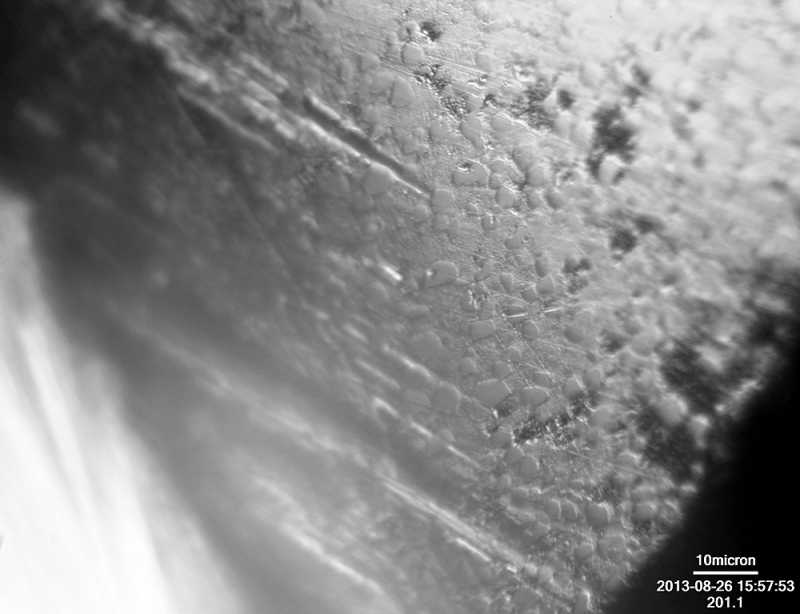
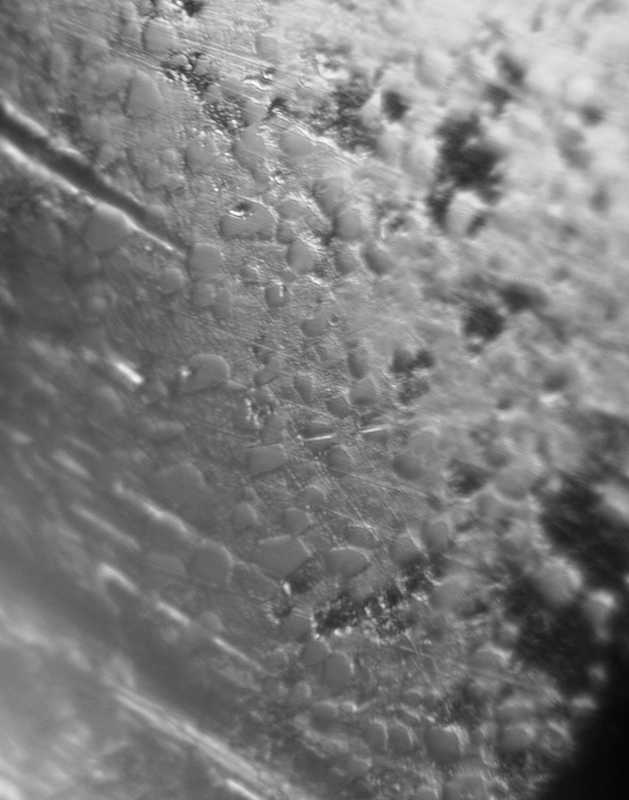
Here’s a shot of the REX-121 Mule at 2000x:
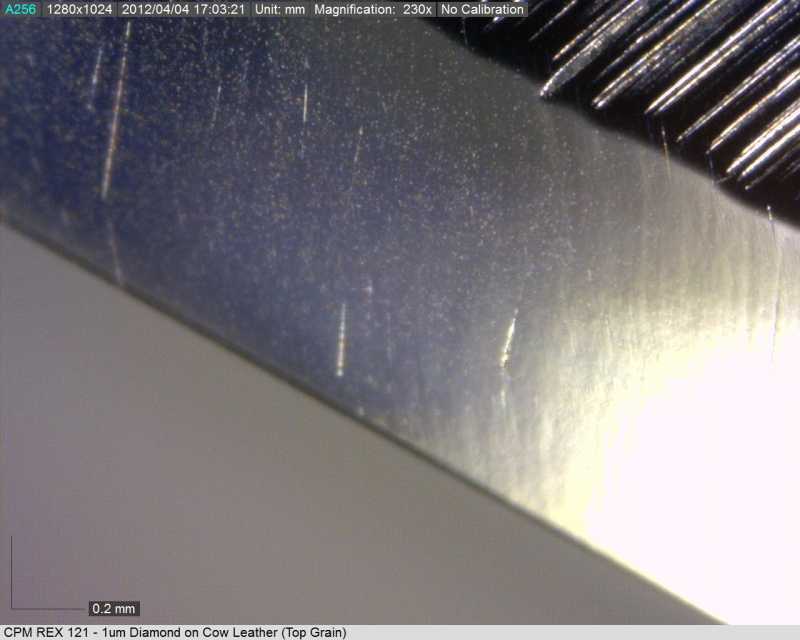
For reference, here it is at lower magnification - 230x:
Attachments:
My confusion getting late here (long night last night the weather changed end of summer thunder and lightening plus monsoon type rain and now the air temperature down 5ËšC )although I see Naniwa do a 12k stone yes you are quite right Shapton do the 30k.
Thats awesome the one I have seen is similar but I think it was a folder .
Do you have any intention of putting a handle on it be it paracord or carbon fibre scales could be suitable hightech and interesting.
Thanks for the picture!
[quote quote=“LeoBarr” post=13687]Thats awesome the one I have seen is similar but I think it was a folder .
Do you have any intention of putting a handle on it be it paracord or carbon fibre scales could be suitable hightech and interesting.
Thanks for the picture![/quote]
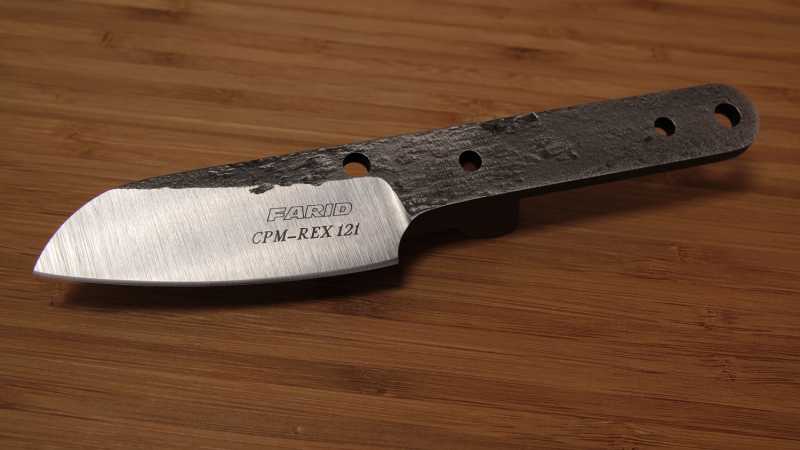
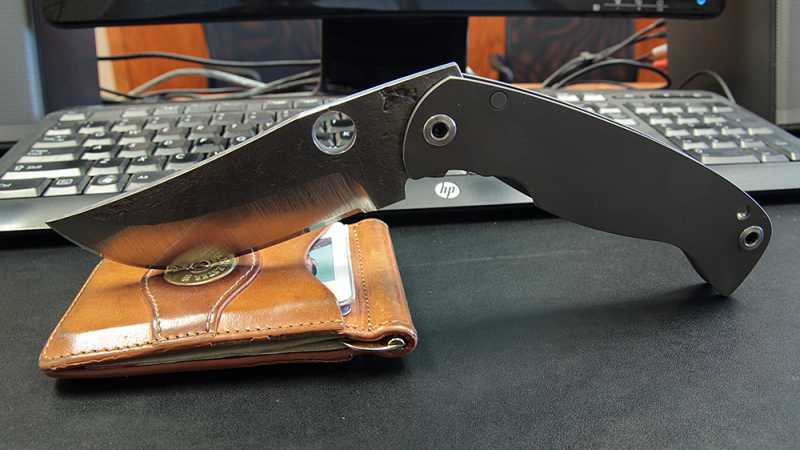
I originally had a cord handle on it:
I have some G10 material to make scales, just haven’t found the time to make a project of it. Carbon fiber would be even cooler.
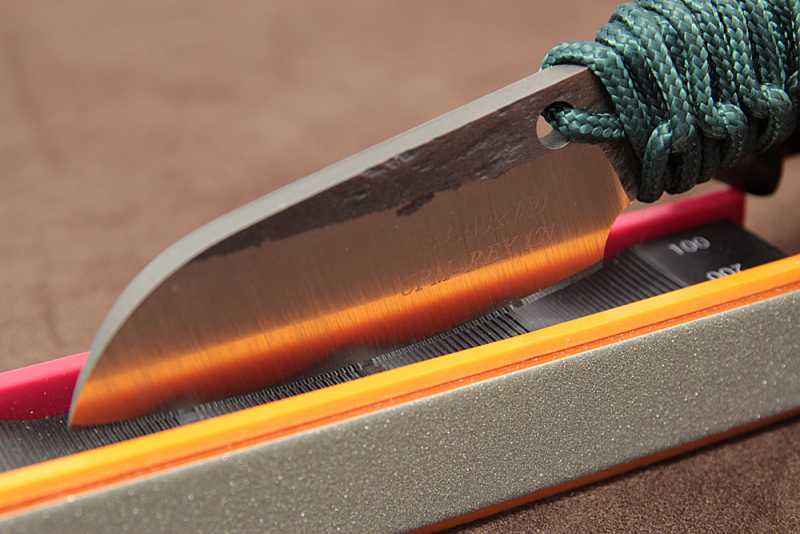
This might be the folder you’re thinking of:
This one belongs to Leo Mitchell. He had it sent to me for sharpening and I got the chance to fool with it a bit. It’s a beast.
Attachments:
That certainly looks like the culprit !
[quote quote=“wickededge” post=13684]Phil,
Here’s a shot of the REX-121 Mule at 2000x:
[/quote]
That is some real gnarly looking steel
:evil:
Is it my imagination… does it look like those irregular blobs (sorry for hyper technical reference) are raised above the rest of the steel. It almost looks like the material that appears lower shows scratches (abrasion caused striations ??) whereas the raised areas do not. Interesting for sure. I wonder if we are looking at carbides… you know the blobs… with the softer material having been abraded away around them…
Hmmm.

[quote quote=“PhilipPasteur” post=13694][quote quote=“wickededge” post=13684]Phil,
Here’s a shot of the REX-121 Mule at 2000x:
[/quote]
That is some real gnarly looking steel
:evil:
Is it my imagination… does it look like those irregular blobs (sorry for hyper technical reference) are raised above the rest of the steel. It almost looks like the material that appears lower shows scratches (abrasion caused striations ??) whereas the raised areas do not. Interesting for sure. I wonder if we are looking at carbides… you know the blobs… with the softer material having been abraded away around them…
Hmmm.
:P[/quote]
I was thinking the same about the carbides, comparing that photo to the PDF you linked. They have some very similar characteristics.
What progression did you use to sharpen the REX 121 Clay. If those are carbides, something you used sure looks like it flattened and smoothed them out.
I can’t tell for sure, perhaps the depth of field, but it really looks like there are scratches in the background material that just do not continue onto the carbides, but resume on the opposite side…
[quote quote=“PhilipPasteur” post=13696]What progression did you use to sharpen the REX 121 Clay. If those are carbides, something you used sure looks like it flattened and smoothed them out.
I can’t tell for sure, perhaps the depth of field, but it really looks like there are scratches in the background material that just do not continue onto the carbides, but resume on the opposite side…[/quote]
I’ll have to double check but I’m pretty sure that it was standard diamond plates through 1000, then core leather strops to .5um and then kangaroo strops to .25um.
I’ll examine the original photo more closely in the morning to look for what you’re describing.
Phil,
Here’s a closer look at the photo. I sharpened the image and up the contrast a little as well:
Attachments:
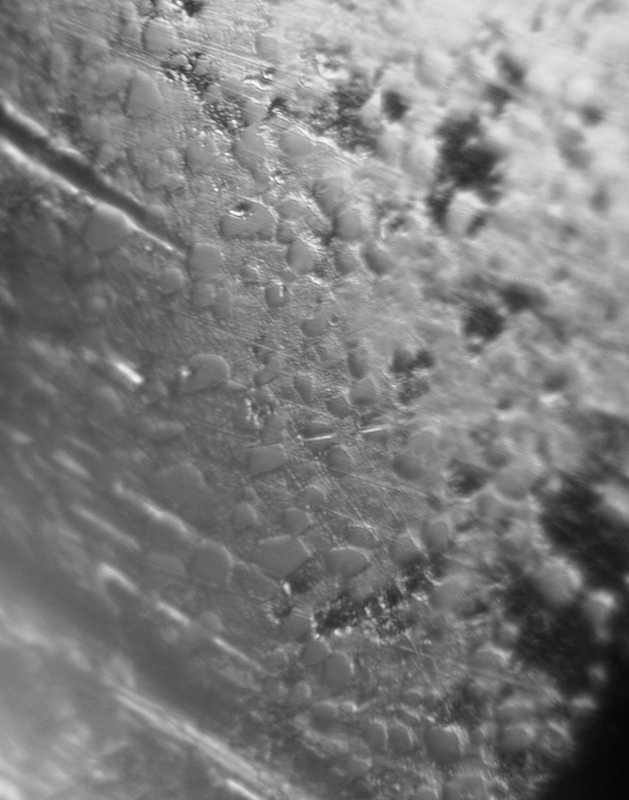
Phil,
Here’s a closer look at the photo. I sharpened the image and upped the contrast a little as well:
Attachments:
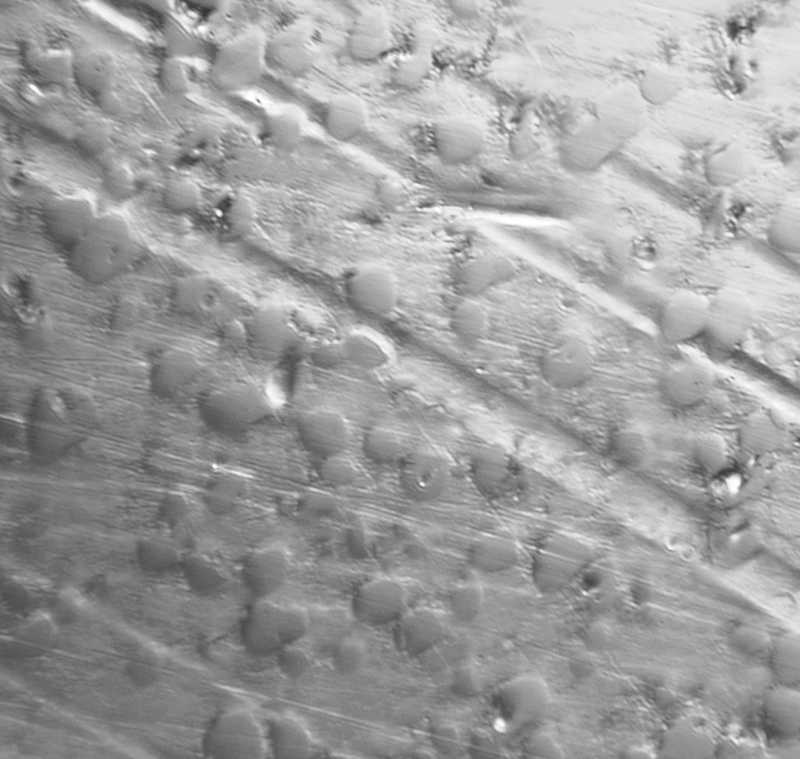
Here’s another look with some image stacking to try and increase the depth of field:
Attachments:
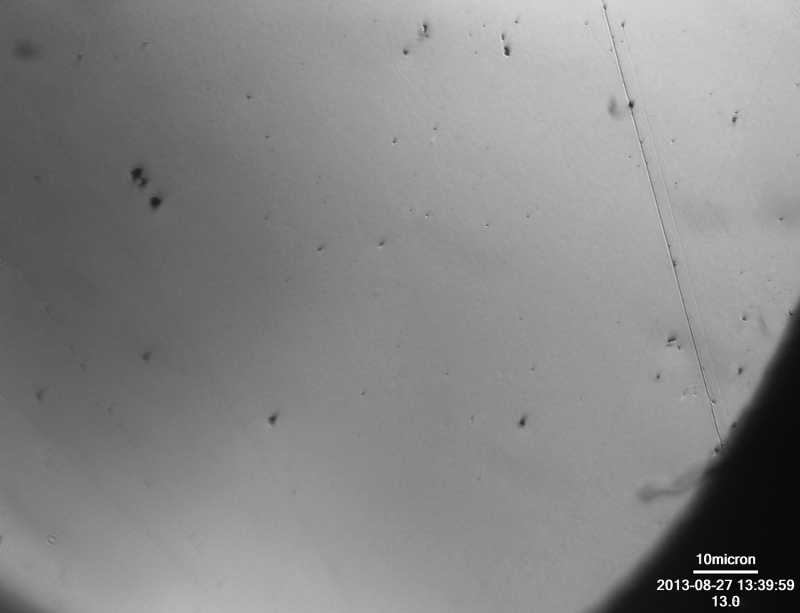
For comparison’s sake, I took a series of photos of another blade I’ve sharpened, stacked them for greater depth of field, sharpened them and added some contrast. This blade is an unspecified “high carbon” utility blade that I took to .25um on kangaroo strops:
There aren’t any exposed/raised features in this blade…
I’ll need to do more work on the REX-121 blade to see what happens.
Attachments:
I took your photo of the REX 121 and marked it to show some for the features that I am looking at… have to post later .. at work.
I wonder…and will do some research on this… are there any carbides in standard “Carbon Steel”
I should have said…the kind of precipitated carbides that might show up optically..
The second photo with the stacking is much better BTW!!